
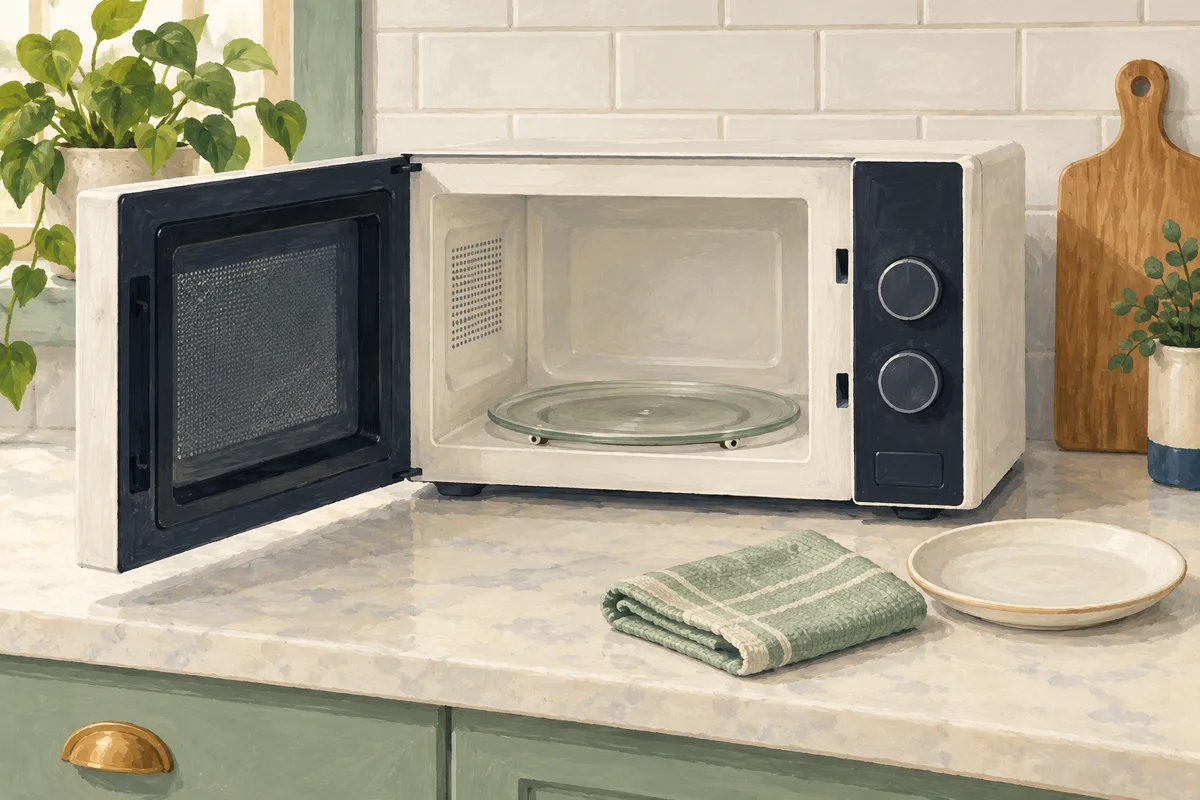
A burnt-popcorn smell after a known cooking mishap is different from an unexplained electrical odor. Before trying to deodorize the microwave, establish which situation you have. Cleaning advice applies only to ordinary food residue in an otherwise undamaged appliance.
First decide whether this is a cleaning problem
| Situation | Next step |
|---|---|
| Known overheated food, no fire or damage | Let the appliance cool, then follow its instructions for accessible interior cleaning. |
| Electrical or burning-plastic smell, unknown source, sparks or visible damage | Stop using it and contact the manufacturer or a qualified service provider. |
| Fire inside the microwave | Keep the door closed and turn the appliance off if safe. Leave and call emergency services if there is danger or the fire does not go out. |
| Food odor remains after cleaning | Recheck accessible residue and the manual's odor guidance; do not repeatedly heat stronger mixtures. |
The U.S. Fire Administration advises keeping a microwave door closed during an internal fire. Do not open it to retrieve food or start cleaning. After a fire, keep the appliance out of use until the manufacturer or a qualified service provider has assessed it.
A door that is bent, damaged or does not close properly also rules out further use. See the FDA's microwave safety guidance. Never remove the outer cabinet to look for the odor source.
Remove the food residue before treating the smell
For a cooled, intact microwave with a known food odor, start with the owner's manual. Follow its shutdown and cleaning instructions; unplug a countertop unit before manual cleaning when its plug is safely accessible. Do not move a built-in appliance to reach a connection.
- Remove the burnt food and loose crumbs. Check the accessible cavity, including beneath a removable turntable. Leave covers, vents and fixed components in place.
- Clean removable parts as directed. Let a hot glass tray cool before washing it. Use the model's instructions for the tray and support; do not assume every part is dishwasher-safe.
- Wipe accessible surfaces gently. Use a soft cloth with mild soapy water if the manual permits it. Wring the cloth out rather than pouring or spraying liquid into the appliance.
- Remove cleaner residue and dry. Follow with a clean damp cloth where instructed, then dry and refit parts correctly. Keep moisture out of vents and controls.
Samsung's cleaning guidance emphasizes soft materials and warns against harsh products and moisture entering vents. Skip steel wool, scouring pads, bleach, ammonia, solvents and fragrance sprays. Do not scrape a stubborn mark with a blade or remove a panel to clean behind it.
Use a fresh cloth so you are not wiping old grease back onto the surface. If yours has picked up residue, our guide to washing microfiber cloths according to their care labels explains how to prepare it for another job.
Should you heat lemon water or vinegar?
Only use a heated cleaning method that your microwave's instructions allow, and only after you have ruled out damage, an electrical smell and a fire. Some manufacturers provide a specific steam-clean cycle or a measured odor-removal method. That does not make a recipe suitable for every appliance.
Whirlpool places mild-soap cleaning before its heated odor treatment. For an applicable model, follow the complete manufacturer procedure, including container, quantity, heating time and cooling precautions. Do not combine pieces of different online recipes.
Heating longer is not a reliable improvement. The FDA warns that overheated water can erupt when disturbed even when it does not appear to be boiling. If your manual does not give a suitable method, stay with manual cleaning and ask the manufacturer rather than improvising a boiling-water treatment.
What if the burnt smell is still there?
Check whether a food particle remains under the tray or on an accessible surface you missed. Panasonic identifies food residue as one possible source of a burning smell, while recommending service when the interior is clean and the concern continues.
For ordinary residual food odor, allow the cleaned cavity to dry and air as the manual permits. Keep an open door out of walkways and away from children. GE notes that some cooking odors can take days to fade; it also separates non-food electrical smells from routine deodorizing. There is no universal promise that a bowl of lemon water will make the smell disappear immediately.
If the smell changes, its source is uncertain, or it persists despite the recommended cleaning, stop and contact support with the model number, the original food incident and the cleaning steps already used. Do not run empty cycles or repeatedly heat the appliance to test whether it is safe.
Reduce the chance of another burnt-food odor
Use the food package and appliance instructions together, stay nearby during cooking, and remember that a time that worked in one microwave may not suit another. Clean splatters after the appliance has cooled, use only suitable microwave-safe containers and covers, and keep the manufacturer's care instructions handy.
Our safety standards explain the boundary between routine care and appliance repair. A cleaner interior is useful; it does not certify that a damaged microwave is safe.
Method: synthesis of manufacturer and U.S. safety-agency guidance with AI assistance. No odor-removal experiment or appliance safety test was performed. The image is an editorial illustration.