
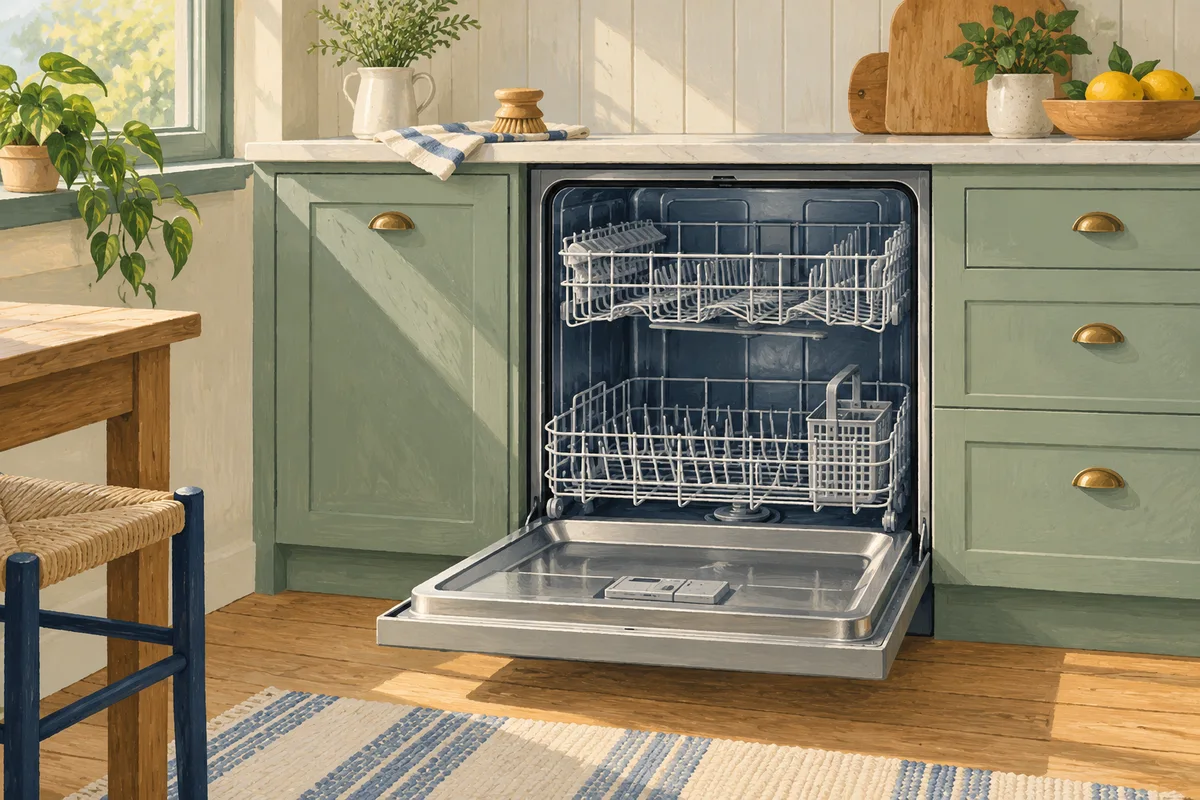
Check the symptom before running another cleaning cycle
Food caught in a filter or along the door can make a dishwasher smell even though it washes with detergent. But an odor accompanied by poor draining needs a different response from a few food deposits.
| What you notice | Start here | When cleaning is not enough |
|---|---|---|
| Food odor after dishes sit for days | Remove scraps and review the manual's rinse or wash options. | Odor persists after routine maintenance. |
| Odor with deposits around the door or filter | Clean accessible areas and the user-removable filter as instructed. | The filter is damaged or will not fit securely. |
| Bad smell plus a large pool of water after a cycle | Follow the model's drainage troubleshooting or contact service. | Do not keep running deodorizing cycles over a drainage fault. |
| Smell remains after the interior is clean | Check whether it is also noticeable around the connected sink. | Persistent drain-associated odor needs plumbing advice. |
Samsung distinguishes a small amount of leftover water from a large amount associated with poor draining. Your model's normal water level matters; the goal is not to dismantle the machine to make every hidden recess dry.
Find out which filter your dishwasher has
Do not twist out a part just because a video shows a similar dishwasher. Some models have a filter intended for regular removal; others use a maintenance-free system with a separate object cup. Whirlpool's filter guide describes both arrangements.
Find the model number and its care instructions. Before reaching inside, stop the cycle, let hot parts cool and follow the manual's power-isolation directions. Keep children and pets away from the open appliance. If you encounter broken glass or cannot safely access a part, stop rather than reaching blindly into the sump.
Clean the accessible food traps first
- Empty the dishwasher. Remove dishes and only the racks or baskets needed for safe access.
- Clean the filter if it is user-removable. Follow the exact removal procedure. Rinse away loose food; use a soft brush only where the manual permits. Avoid scraping delicate mesh.
- Wipe the door edges and seal. Use the material-safe method specified for your appliance. Food can collect in areas a normal wash does not clean well.
- Reinstall before running. Confirm every removed component is correctly seated and locked as the manual requires. Do not operate with a missing or insecure filter.
Whirlpool's odor guide identifies the filter, interior deposits, seal and drain as places to investigate. This does not mean all four need dismantling. Leave pumps, hoses and built-in installation work to the appropriate professional.
Use one approved cleaning method
If the manual calls for a maintenance cycle, use a dishwasher cleaner compatible with the model and follow its label for dose, placement and cycle. A product used to hand-clean a removable part is not automatically suitable to pour into the wash tub.
Do not combine cleaner, vinegar, bleach or other household products. Samsung specifically warns against bleach in stainless-steel dishwasher interiors. Brand instructions differ, so a vinegar quantity recommended for one machine is not a universal recipe.
White mineral deposits are a separate clue from odor. Our hard-water stain guide covers household surfaces; do not transfer a countertop or faucet treatment to a dishwasher's internal components.
If a new sound accompanies the odor, use our guide to dishwasher noises and safe loading checks. Persistent grinding or another warning sign requires service, not stronger odor treatments.
If the smell comes back
After the recommended maintenance cycle, check whether the odor, deposits and draining behavior improved. If the same problem remains, record the model, error messages and what you cleaned. Do not repeat stronger chemical treatments.
Bosch notes that a restricted or damaged drain connection can prevent wastewater leaving properly. Have an installer or plumber assess a suspected connection problem rather than pulling out a built-in appliance yourself.
For prevention, scrape off large scraps, avoid storing dirty dishes for prolonged periods and use the maintenance schedule for your model. Miele also emphasizes regular care of filters, spray arms and door seals. Different parts have different access instructions; routine care does not require improvising a repair.